logo
ホーム ニュース

会社のニュース what kind of Components reusing for Temporary Project-Based Facilities when Modular Cleanroom Disassembly

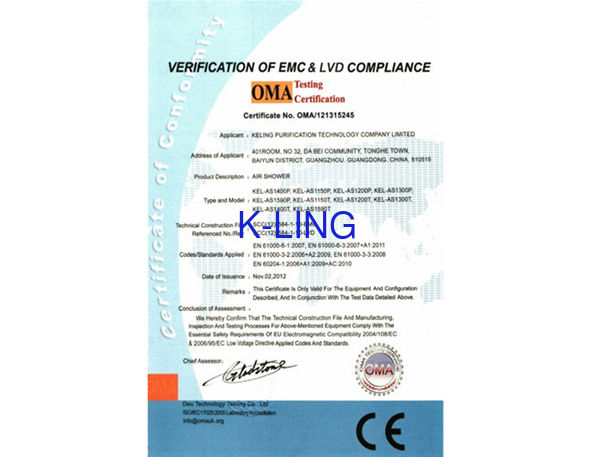
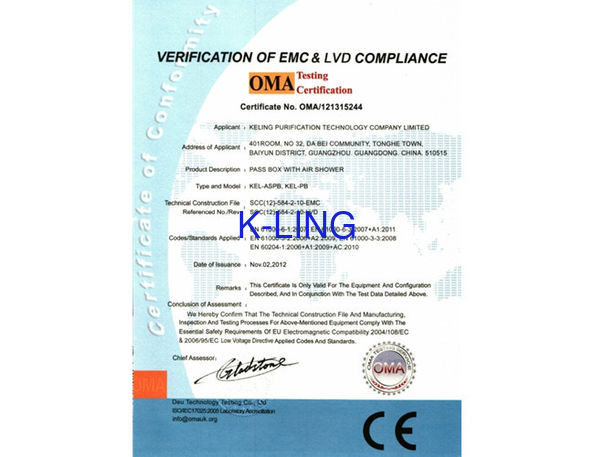
認証
中国 KeLing Purification Technology Company 認証
顧客の検討
KelingはPO NO.M170807に対して25 Oct.2017のプロダクトの後で首尾よく私達を供給しました;供給されたエア フィルターはずっと取付け以来申し分なく働いています。私達は彼らのプロダクトに満足します。

—— SIMPOR PHARMA

私達がそれらの coopertae をするので、それらは良質を常に提供し、配達を私達に時間通り、私達親切なサポートのために appreicated 保ちます!

—— Nasir

これは、二次エア フィルター、KeLingの浄化の技術のCo.株式会社の3C01 Tian Fengの商業の正方形、中間の建物、第133、Baiyun AV、Baiyun Disctrict、広州、広東省、契約に対する中国からの私達のプロジェクトのためのperfilter私達がUのタイプ空気シャワーのトンネル、空気シャワーおよびHEPAフィルターを買ったことを証明することではないです:10月22日の2014/4119005942、201

—— IATEC、アルゼンチン

プロダクトは特別な何かを私が発注したことをに加えてより期待されてそれらが送った速く着き。 良い人々および速いサービス!

—— モハメッド Saad

オンラインです
会社 ニュース
what kind of Components reusing for Temporary Project-Based Facilities when Modular Cleanroom Disassembly

the ability to disassemble and reuse modular cleanroom components transforms temporary project-based facilities from disposable assets into capital resources that appreciate through multiple deployments. As industries increasingly demand agility and sustainability, the reusable modular cleanroom stands as a model of operational intelligence—where every component carries forward not just its physical form, but the accumulated learning of every environment it has served.

The Disassembly Sequence: A Reversed Installation

Effective disassembly follows a structured, documented sequence that mirrors installation in reverse. The process begins with environmental lockdown—sealing off the decommissioning zone to prevent particulate migration into adjacent active areas. Utilities are isolated and purged; electrical connections are locked out and tagged. Critical environmental data, including final pressure cascade readings and particle counts, are recorded as a baseline should any post-reassembly performance questions arise.

Component removal proceeds from interior to exterior: furniture and equipment first, followed by ceiling panels and FFU modules, then wall panels in reverse order of their original erection sequence. Flooring systems, often the most contamination-laden elements, are removed last. Each disassembled component undergoes immediate visual inspection. Panels with compromised gaskets, dented surfaces, or corrosion are flagged for refurbishment or replacement before entering the reuse inventory. Components passing inspection are cleaned, wrapped in protective film, and labeled with their origin location to facilitate efficient reassembly.

The Economic Calculus of Reuse

For temporary project-based facilities, the financial logic is compelling. A modular cleanroom amortized over three or four deployments can achieve a total cost of ownership fifty to sixty percent lower than a permanently constructed equivalent used for a single campaign. Beyond direct capital savings, reuse eliminates the waste stream associated with demolition—gypsum board, fiberglass insulation, and mixed construction debris that would otherwise require specialized disposal. Sustainability goals align with operational budgets.

The scheduling advantage is equally significant. A pre-inventoried component set can be shipped to a new site and reassembled in a fraction of the time required for new fabrication. Project timelines compress, enabling faster response to market opportunities or research milestones. Companies maintaining a strategic reserve of modular cleanroom components gain the ability to deploy controlled environments as a service capability rather than a capital project.

Managing the Risks of Reuse

Component reuse introduces risks that must be actively managed. Gasket materials age and compress over time, potentially compromising seal integrity upon reassembly. A protocol of replacing all gaskets at each redeployment eliminates this variable. HEPA filters, while potentially within their rated service life, should undergo re-certification testing before reinstallation. Structural members subjected to multiple assembly cycles require dimensional verification to ensure cumulative tolerance drift has not occurred. These quality gates, embedded into the disassembly and pre-reassembly workflow, ensure that each deployment meets original performance specifications regardless of how many previous cycles the components have experienced.

パブの時間 : 2026-07-06 12:10:26 >> ニュースのリスト
連絡先の詳細
KeLing Purification Technology Company

コンタクトパーソン: Mrs. Zhao

電話番号: 86 20 13378693703

ファックス: 86-20-31213735

私達に直接お問い合わせを送信 (0 / 3000)